Editor-in-Chief: Dr Andrew E. Yaw Tchie Managing Editor: Happi Cynthia Publisher: African Solution Journal Abstract and Introduction Submission...

Call for papers: African Solutions Journal
read more

Editor-in-Chief: Dr Andrew E. Yaw Tchie Managing Editor: Happi Cynthia Publisher: African Solution Journal Abstract and Introduction Submission...
Author: Victor Kofi Afetorlom DOKE Ph.D. & Michelle OCHERE-DARKO Analysis Report | July 2025 Download
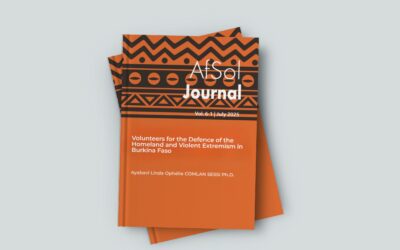
Author: Ayabavi Linda Ophélie COMLAN SESSI Ph.D. Volume 6, Issue 1, 2025 Download
June & December
July & December

Senior Fellow, Norwegian Institute of International Affairs (NUPI)
Training for Peace (TfP) Programme Coordinator
Email: [email protected]
Telephone:
+47 906 22 889 / +44 7803 817896

Africa Peace and Security Programme (APSP)
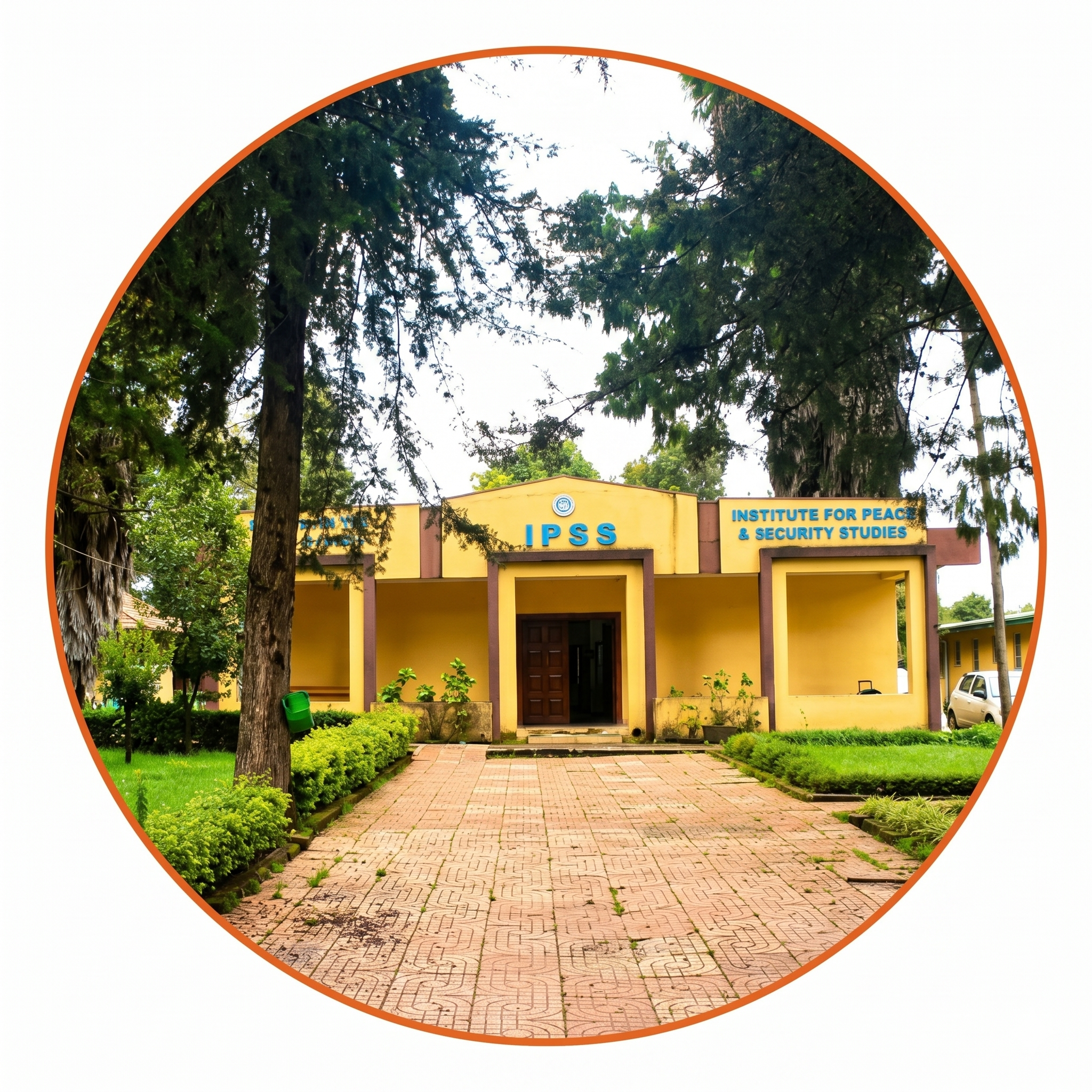
Institute for Peace and Security Studies (IPSS)
Addis Ababa University
Email: [email protected]
Telephone:
+251 991 161 950
Addis Ababa University
P.O. Box 1176
Addis Ababa, Ethiopia
General Editorial Enquiries:
[email protected]

Editor-in-chief
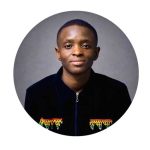
Dr Andrew E. Yaw Tchie is a Senior Research Fellow at the Norwegian Institute of International Affairs (NUPI) and manager of the Training for Peace Programme at NUPI. He is the Editor-in-Chief of the African Solutions (AfSol) Journal at the Institute for Peace and Security Studies. He is a visiting Professor at the University of Buckingham, a visiting Senior Fellow at Kings College London and an Associate Fellow at the Royal United Services Institute (RUSI). His research focuses on African-led Peace Support Operations, UN peace operations, stabilisation in Africa, African Armies, Transitional Governments and United Nations-African Union-Regional Economic Communities partnership and African Border Governance and Security. He formerly worked for the UN mission in South Sudan, Sudan and UNDP in Nepal. He was formerly the Obasanjo Fellow at RUSI and Senior Fellow for the International Institute for Strategic Studies, where he managed the Armed Conflict database.
Managing Editor
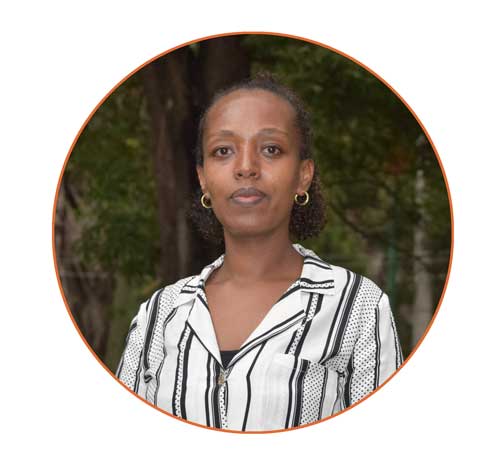
Cynthia Happi is the Managing Editor of the African Solutions Journal (AfSoL) at the Institute for Peace and Security Studies (IPSS), Addis Ababa, Ethiopia. She holds a master’s degree in international relations (International disputes and conflict resolution) from the International Relations Institute of Cameroon (IRIC) and is currently pursuing a joint PhD in Global Studies (with a special emphasis on peace and security in Africa) at Leipzig University and Addis Ababa University. Prior to joining IPSS, Mrs Cynthia was seconded by the African Union to serve as a Program Support Officer at CEMASTEA in Nairobi, Kenya. She also previously worked for the United Nations Centre for Human Rights and Democracy in Central Africa (UNCHRD-CA). Her research interests are on governance, democracy and electoral conflicts in Africa.
Interim Director, Institute for Peace and Security Studies
Editorial Board
Mercy Fekadu Mulugeta (Ph.D.) is an Associate Professor and Deputy Director of the Institute for Peace and Security Studies, AAU, and Secretariat Member of the Tana High-Level Forum on Security in Africa (Nov 2011–On-Going). Her research interests include; Borderland Governance, Boundary and Territorial conflict, Security Governance, Statehood, Conflict, Small Arms and Light Weapons, Disarmament, Regionalisms, Women, Peace, and Security.
Principal Investigator (Oct 2020 to Oct 2021): Facebook-funded research project entitled Dangerous Speech, Social Media and Violence in Ethiopia;
Co-Investigator (April 2020 to March 2023): UKRI/ GCRF funded project entitled Dangerous Speech, Social Media and Violence in Ethiopia;
Principal Investigator(May to August 2020): Netherland Institute for Multiparty Democracy (NIMD) funded project entitled Probing the practice of Representation for informed Intervention in Parliaments (PRIP): Focus on the House of People’s Representatives of Ethiopia;
Principal Investigator (2018 to Dec 2019): GIZ/ African Union border programme funded Research project entitled Research on Boundary and Territorial Conflict Eastern and Greater Horn of Africa;Principal Investigator(2018-2019): Global Research Network on Parliaments and People funded research project entitled Bridging research and innovation for democratic governance and enhanced participation (BRIDGE 4 Participation);
Principal Investigator (2017-2019): ESRC – DfID funded research project entitled Shifting Inequality Dynamics in Ethiopia: From Research to Practice (SIDERA);
Hodbod, J., Stevenson, E. G., Akall, G., Akuja, T., Angelei, I., Bedasso, E. A., … Mercy Fekadu Mulugeta& Kamski, B. (2019). Social-ecological change in the Omo-Turkana basin: A synthesis of current developments. Ambio, 1-17.
Mercy Fekadu Mulugeta;Gebresenbet, F., Tariku, Y., & Nettir, E. (2019). Fundamental Challenges in Academic–Government Partnership in Conflict Research in the Pastoral Lowlands of Ethiopia. IDSBulletin, 50(1).
Mercy Fekadu Mulugeta(2017) Small Arms And Conflict Among East African Pastoralists: The Karamoja (In)Security Complex. Africa, 87(4), Oct 2017.
Mercy Fekadu Mulugeta, Gebresenbet, F., and Kamski, B. (2019). Sugar industry in the Lower Omo: Exploring different scenarios of privatization. (Briefing Note #6). In Omo-Turkana Research Network Briefing Notes, edited by J. Hodbod & E.G.J. Stevenson. East Lansing, MI: OTuRN.
Mercy Fekadu Mulugeta.Digital Participation in Ethiopia: A presentation of a web based application (BRIDGE)for the House of People’s Representatives. (2019). Policy Brief. Bete-Semay Creative Media.
Editorial Board
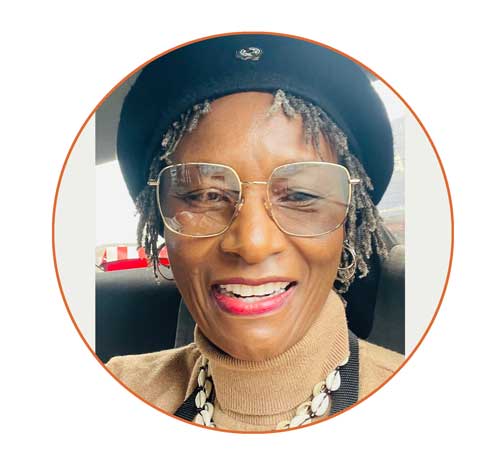
Annie Barbara Chikwanha (PhD-University of Bergen) teaches political science at the University of Johannesburg and consults independently on democracy and governance, security sector governance, and peace and conflict in the African region. She previously worked for regional think tanks in South Africa, Nairobi, and Addis Ababa for the Institute for Security Studies. She also taught at the University of Zimbabwe where she became the first principal investigator for the Afrobarometer Network in the country and she later worked for the network in the region. She has led various teams of regional experts in conducting assignments across different themes. She is currently involved in an Africa, Asia and South America research project on the Southern Perspectives on Democratic Resilience that is run by the Center for Democratic Development in Ghana in collaboration with Asuntos del Sur (ADS, Argentina) and the Centre for Elections, Democracy, Accountability, and Representation (CEDAR) at the University of Birmingham (UK).
Editorial Board
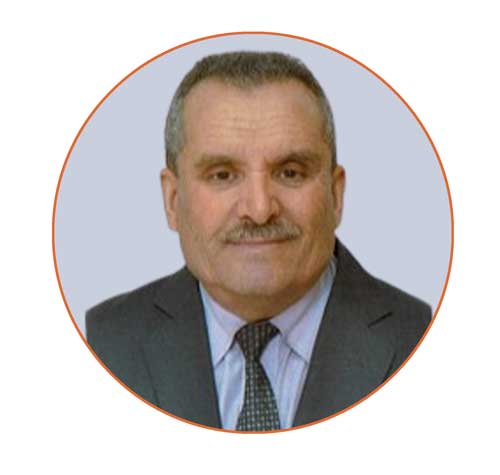
Laeed Zaghlami is a Full Professor at the Faculty of Information and Communication, University of Algiers 3 and Associate Professor at the Algerian Institute of Diplomacy and International Relations (2022–2025). He holds a PhD in Social Sciences from the University of Algiers 3, an MPhil from the University of Surrey (UK), and a diploma from the International Academy of Broadcasting, Switzerland. With over three decades at the Algerian Broadcasting Enterprise (1982–2013) in roles ranging from journalist to senior management, Prof. Zaghlami has also served as an external examiner at the University of Mauritius, North Africa Representative of the African Media Initiative, and member of AUDA-NEPAD’s Media Network. He has been active in numerous international professional bodies, including the European Broadcasting Union, International Press Institute, and International Peace Research Association. An accomplished scholar and speaker, he has authored and contributed to multiple books and articles on media, diplomacy, peacebuilding, ICT, and governance in Africa, and regularly participates in high-level conferences across the continent. He sits on editorial boards for international academic journals, reviews for Social Media and Society (UK), and has received awards for his work on ICT and media in Africa. Fluent in Arabic, French, and English, his research interests span politics, media, social media, ICT, diplomacy, peace and security, soft power, and international relations.
Editorial Board
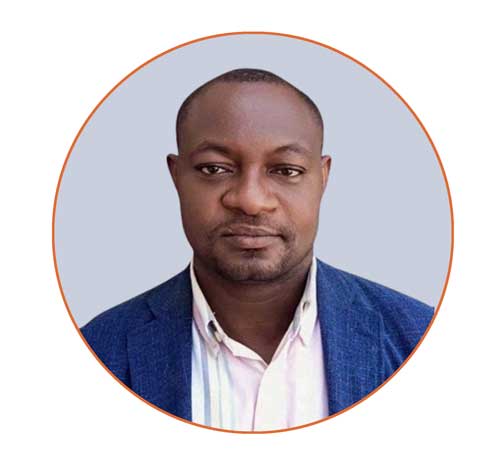
Erameh Nicholas Idris holds Bachelor of Science (BSc), Master of Science (MSc), and Doctor of Philosophy (PhD) degrees in Political Science from the Department of Political Science, University of Ibadan. His area of specialisation is international relations. Nicholas is a Senior Research Fellow and head of the Division of International Relations at the Nigerian Institute of International Affairs (NIIA). He was recently appointed as an extraordinary researcher at the Afrocentric Governance of Public Affairs (AGOPA) Research Entity, North West University, South Africa, where he also did his post-doctoral fellowship. Erameh is an early career scholar and has received several local and international awards and prizes. He has co-edited several books and has published numerous articles in well-referenced journals. He has also presented academic papers at local and international conferences in Africa and across the globe. He is a member of several local and international organizations. Erameh’s research interests cover global politics and security, foreign policy, human rights and human security, mass atrocities, peacekeeping, post-conflict reconstruction, refugees and migration, armed conflict, ethnic, holocaust, and genocide studies, humanitarian intervention, and the responsibility to protect (R2P).
Editorial Board
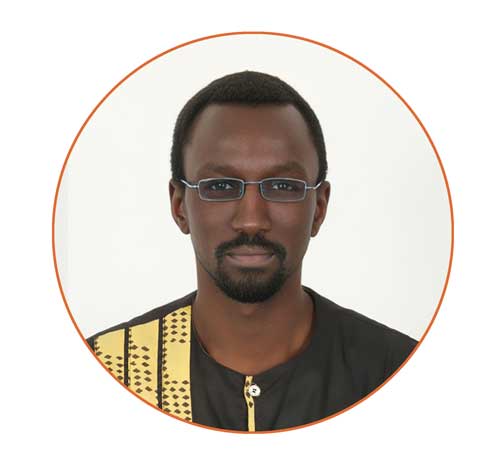
Sali Bouba Oumarou is an independent consultant, researcher, and former Deputy Editor-in-Chief with extensive experience in political science, international relations, and media. He has led research projects for international organizations such as the African Union, KAICIID, and UN-Habitat, producing influential reports and over ten scientific publications. A skilled communicator and public speaker, he has presented at global forums including the Kofi Annan Peace Forum and the China-Africa International Forum.
Author of the essay Derrière les chefs d’État : le conseiller and several literary works, including the poetry collection L’Amour au-dessus de moi and the novels Les l(armes) du pouvoir, Analyste jusqu’au bout, and Boukhalef jusqu’au bout, Dr. Oumarou combines rigorous analysis with creative storytelling to explore governance, mediation, and social change. He holds a Doctorate in Public Law – International Relations and works in French and English.

Governing Board
Dr. Olajumoke (Jumo) Ayandele is Clinical Assistant Professor of Practice at New York University’s Center for Global Affairs and a scholar-policy practitioner whose work sits at the intersection of African security, governance, and human development. Her mission is clear: to advance African-led solutions that address the root causes of conflict, foster sustainable economic growth, and build durable pathways to peace.
Holding a Ph.D. in Global Affairs, Dr. Ayandele is recognized for her thought leadership on the intersections of governance, civil-military relations, and human security in fragile and post-conflict states. She serves on the Advisory Board of the Armed Conflict Location & Event Data Project (ACLED) and is a member of the United Nations Counter-Terrorism Committee Executive Directorate (CTED) Global Research Network. Her work draws on extensive field experience across Africa and bridges academic research with real-world policy practice.
She is also the co-founder of the African Wars in the 21st Century Workshop Series—a platform convening scholars, policymakers, and regional leaders for solutions-driven dialogue on Africa’s evolving security and development landscape.
Dr. Ayandele’s current work explores how geopolitical realignments and South–South cooperation are reshaping the public–private nexus in Africa, from security partnerships to innovation-driven growth. Her vision is grounded in the conviction that African states must move beyond externally imposed frameworks and instead champion inclusive, locally informed, and context-sensitive approaches to governance and development.
Governing Board
Mwita Chacha is an associate professor of international relations in the Department of Political Science and International Studies at the University of Birmingham. His research examines regionalism and regional integration and their intersection with domestic political and security outcomes. He is particularly interested in understanding public opinion toward regional organizations in the developing world, international responses to coups d’état, and the role of regional organizations in post-coup politics.
Governing Board
Joana Ama Osei-Tutu is a peace and security practitioner with expertise in gender, peace, and security (GPS); gender mainstreaming; project management; stakeholder engagement; research; curriculum development; and facilitation. She specialises in conducting needs assessments and translating identified gaps into practical programmes and knowledge resources.
In 2017, she became Head of the Women’s Peace and Security Institute at the Kofi Annan International Peacekeeping Training Centre, where she advanced the Women, Peace and Security agenda across Africa. Her work focuses on designing context-specific initiatives in collaboration with diverse stakeholders. Following the Institute’s elevation to a department in 2022, she now serves as Acting Deputy Director.
Joana holds a BA in English and Psychology from the University of Ghana and a Master’s in International Studies from Ewha Womans University, South Korea. She is currently pursuing a PhD at Monash University, Australia, researching conflict dynamics and the strategic use of sexual violence by terrorist groups in Africa.
Governing Board
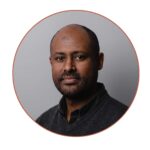
Daniel Mulugeta is Senior Lecturer in the International Politics of Africa at SOAS University of London and Founding Director of the SOAS Centre for Pan-African Studies (CPAS). He is a UKRI Future Leaders Fellow leading the projects Pan-African Frontiers and Identities: The Remaking of Africa in World Politics (2022–2026) and Pan-African Frontiers: Reparative Futures and the Reimagining of Global Order (2026–2029), which examine how Pan-Africanism is being rearticulated across Africa and the diaspora. His research focuses on African politics and international relations, with particular interests in Pan-Africanism, regionalism, and the politics of the Horn of Africa.

Governing Board
Professor Toni Haastrup is Chair in Global Politics at the University of Manchester and Chair of the University Association for Contemporary European Studies (UACES). Her interrogates global power hierarchies with recent focus on feminist foreign policy, Women, Peace and Security, and decolonial approaches to global politics. She has published on Africa–EU relations and on the African Union (AU). She works extensively at the research–policy interface, advising organisations such as UN Women and contributing to parliamentary and international policy processes. Across most areas of her work, she is committed to advancing Global South epistemologies and inclusive research practices.

Governing Board
Richard Fosu is a Lecturer in International Relations at the Department of Politics and International Relations at Monash University. He obtained his PhD in International Relations from the same university in 2023 and his thesis examined the politics of inclusion in local peacebuilding in Uganda. He is interested in inclusive approaches to peacebuilding, transitional justice, politics of knowledge production, critical decoloniality and the African Union. He is currently working with a team on two research projects at the Monash Global Peace and Security (GPS) centre. The projects funded by Global Affairs Canada under the Elsie Initiative Fund for Uniformed Women and the Australian Civil Military Centre (ACMC) investigate women inclusion in security sector institutions and UN peace operations. He has conducted fieldwork in South Sudan, Central African Republic, the Democratic Republic of Congo, Uganda, Ghana and Australia. His works have been published in African Security, Journal of Intervention and Statebuilding, Disasters among others. Richard has previously worked in the Ghanaian public service and has also consulted for range of organisations on inclusive policy-making.